
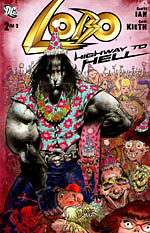
 Written by Scott Ian
Art by Sam Kieth
64 pages, color
Published by DC Comics
I have fond memories of the original Keith Giffen, Alan Grant, and Simon Bisley Lobo mini-series being published. I ran out and bought every issue as they showed up, with its ode to too much violence and general insanity. While the character has been subjected to diminishing returns over the years (although even at the height of Lobo’s over-use, he seemed to always get a good deal in L.E.G.I.O.N.), I’ve never found myself actually flinching away from the character. Any good will I had built up towards the character thanks to 52, though, is now gone courtesy Scott Ian and Sam Kieth.
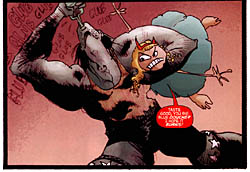 Lobo: Highway to Hell is a two-issue mini-series that manages to shoot its credibility on the first page. How else can you talk about an opening line of, "Head feels like Motorhead is raping it," after all? Between that and mentions of the television show Lost (no, really), it’s the first sign that something is slightly off. From there we get unfunny jokes stretched out into dozens of pages, and an entire second issue where Lobo in Hell is supposed to be funny, but it’s really just the reader in Hell because the issue never seems to end. Kieth’s heart doesn’t appear to be in this either; I understand that sometimes Kieth deliberately devolves his style, but Lobo: Highway to Hell looks like it was drawn on a napkin more times than not. This comic is embarrassing for DC Comics as a publisher. Don’t fall into the same well of regret that I’m currently floundering in. If you haven’t made that mistake already, avoid this book.
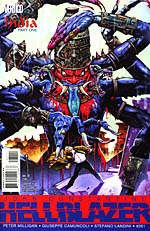 Written by Peter Milligan
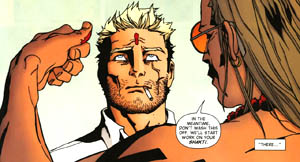 Milligan and company are also taking Constantine out of his normal confines of Great Britain, although admittedly in the case of his destination of India, it’s a former British colony. Still, they’re using it well; there’s a sharp comment or two about the stereotypical ideas that people carry around towards the country and its spirituality. On the down side, Milligan’s also going for the stereotype of the seedy human trafficking underbelly of India, which just goes to show that it’s impossible to break away entirely from some perceptions. Still, with Camuncoli and Landini drawing the book so beautifully, it’s hard to get too worked up over the idea. How they aren’t super stars in comics is a mystery to me. At the end of the day, Milligan, Camuncoli, and Landini are an excellent reminder of why Hellblazer can have over 260 issues and still tell new and fresh stories.
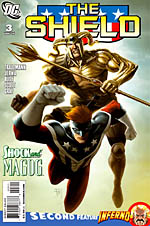 Written by Eric Trautmann and Brandon Jerwa
 At the same time, Trautmann makes sure not to fall into an obvious trap, and does his best to keep the character likable. (I’m not sure what it says about society today that it seems almost expected to have a military character in comics end up unlikable.) Add in some beautiful art by Marco Rudy and Mick Gray (plus an assist by Eduardo Pansica and Eber Ferreira), and this has turned into a well-crafted and entertaining book. Even the parade of DC Universe guest-stars moving through the title hasn’t annoyed me like I’d feared; Trautmann’s done a good job of picking the right characters to appear here.
 By Roman Dirge
 Dirge still follows the old pattern that I remembered in the past; Lenore moves through life in a slightly oblivious fashion, runs into an unexpected (and most likely deadly) obstacle, and ends up defeating it without really trying. All, of course, to the frustration of whomever she’s up against. That’s what we get here, as Lenore has an encounter with the man who originally attempt to embalm her. It’s funny and I chuckled in all the right (or should that be wrong?) places, although at the end of the day Lenore was exactly like I remembered its old run of stories. I think it actually works better as individual comics than a collected edition; the chances of the joke getting old are far less in short doses. Lenore may not set the world on fire, but it makes me laugh and at the end of the day that’s a good thing.